
What drives the price
How Much Does It Cost to Ship a Car?
There is no single price. What you pay depends on how far the vehicle travels, where it is collected and delivered, the size and condition of the vehicle, whether you choose open or enclosed transport, and how flexible your dates are. Rates are set per shipment, so the same route can be priced differently from one week to the next.
We do not publish average prices or price ranges for routes yet. A number is only shown once it can be traced to a documented source and a review date, because an unsourced average sets the wrong expectation before you have even asked for a quote.
What goes into your quote
The same parts build every rate, whether the vehicle is crossing one state or eight. These are the ones a carrier looks at.
Distance
Longer routes generally cost more because they consume more fuel, driver time and trailer space.
Pickup and delivery locations
A dense metro area is usually easier to serve than a remote address, and a location a large truck cannot reach may need a handover point.
Vehicle size and type
Larger and heavier vehicles take up more trailer space and can add to the cost. A compact car and a full-size truck are not priced the same.
Whether the vehicle runs
A vehicle that cannot be driven needs extra equipment and time to load and unload.
Open or enclosed transport
Enclosed transport costs more than open transport because it carries fewer vehicles and uses specialised equipment.
Season and timing
Demand changes through the year and by corridor. Peak moving season and limited carrier availability on a route both affect price.
How flexible your dates are
A wider pickup window usually makes it easier to place a vehicle on a trailer that is already heading your way.
What you can actually influence
Most of the price is decided by the route and the vehicle, which are fixed. These are the parts where what you enter, or how flexible you can be, changes the outcome.
Distance and route
How far the vehicle travels, and whether that route runs through busy corridors or quieter ones.
Nothing to change here, but it is worth knowing that a longer route is not priced by a flat rate per mile.
Route accessibility
Whether both ends can be reached by a large truck without a handover, and whether local restrictions apply.
Give an address you know a truck can reach. If it cannot, say so early so a handover point can be arranged.
Vehicle dimensions
Length, width, height and weight determine how much trailer space the vehicle needs.
Enter the exact year, make and model. Modified, lifted or oversized vehicles should be described accurately.
Vehicle condition
A vehicle that starts, steers and brakes is quicker to load than one that has to be winched on.
Say whether the vehicle runs rather than leaving it to be discovered at pickup. It changes the equipment needed.
Carrier type
Open and enclosed trailers carry different numbers of vehicles and are not equally available on every route.
If your dates are tight, open transport usually offers more scheduling choice than enclosed.
Season and timing
Availability shifts with the time of year and how much traffic a corridor is carrying.
Avoiding peak moving season can help, if your plans allow it.
Pickup flexibility
A flexible window lets a carrier fit your vehicle onto a trip it is already making.
Biggest leverThis is usually the single biggest lever. A wider window generally gives you more options than a fixed date.

Timing
How Long Does It Take to Ship a Car?
Transit time is not one number, and any figure given before your route is known is a guess. What can be explained honestly is what moves the number, and which parts of it you can affect.
Pickup scheduling and time in transit are two separate waits. A carrier may need several days to place your vehicle on a trailer that is heading the right way, and that is usually the part a flexible pickup window shortens.
Total mileage
The single largest factor. A cross-country shipment spends far longer on the road than a regional one.
The route itself
Direct interstate corridors move faster than routes that require detours or back-and-forth legs.
Pickup scheduling
Time before the vehicle is collected is separate from time in transit, and a flexible window shortens it.
Weather
Snow, ice and severe storms can delay a trailer, particularly across mountain passes and in winter.
Traffic and congestion
Metro congestion affects how quickly a carrier can get in and out of both ends of the trip.
Carrier routing
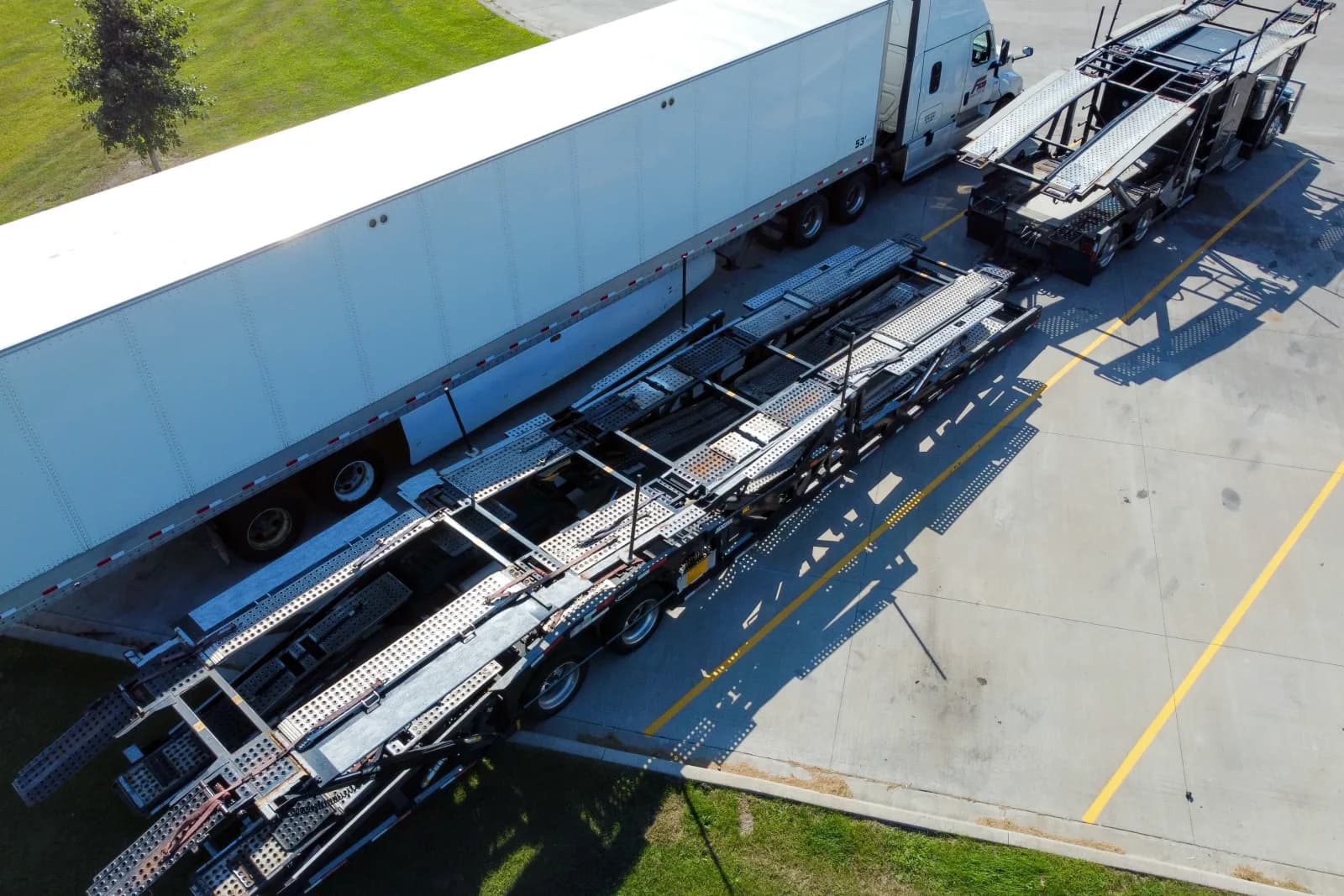
Carriers combine loads, so your vehicle may join a trailer that is already working its way across the country.
Ready to Get a Car Shipping Quote?
Tell us where the vehicle is going and roughly when. It takes a few fields to start, there is no account, and requesting options does not commit you to anything.