
Open Car Transport
How open car transport works: how a vehicle is loaded, secured and delivered on a multi-level trailer, who it suits, what it does not protect against, and how to request it.
Guide reviewed September 16, 2026. This page explains how the method works and what it does and does not protect against. It is not a quotation.
What Open Car Transport Is
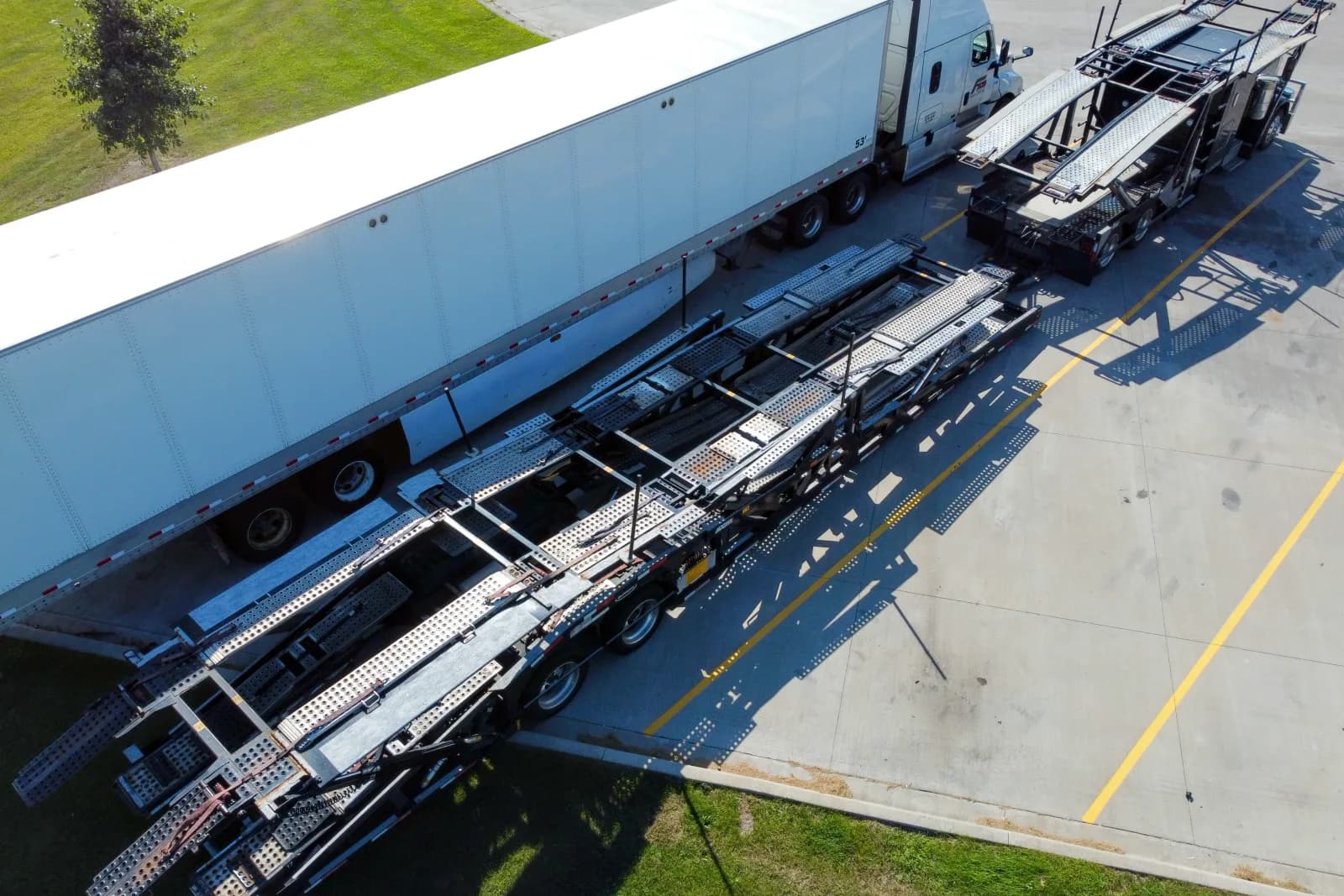
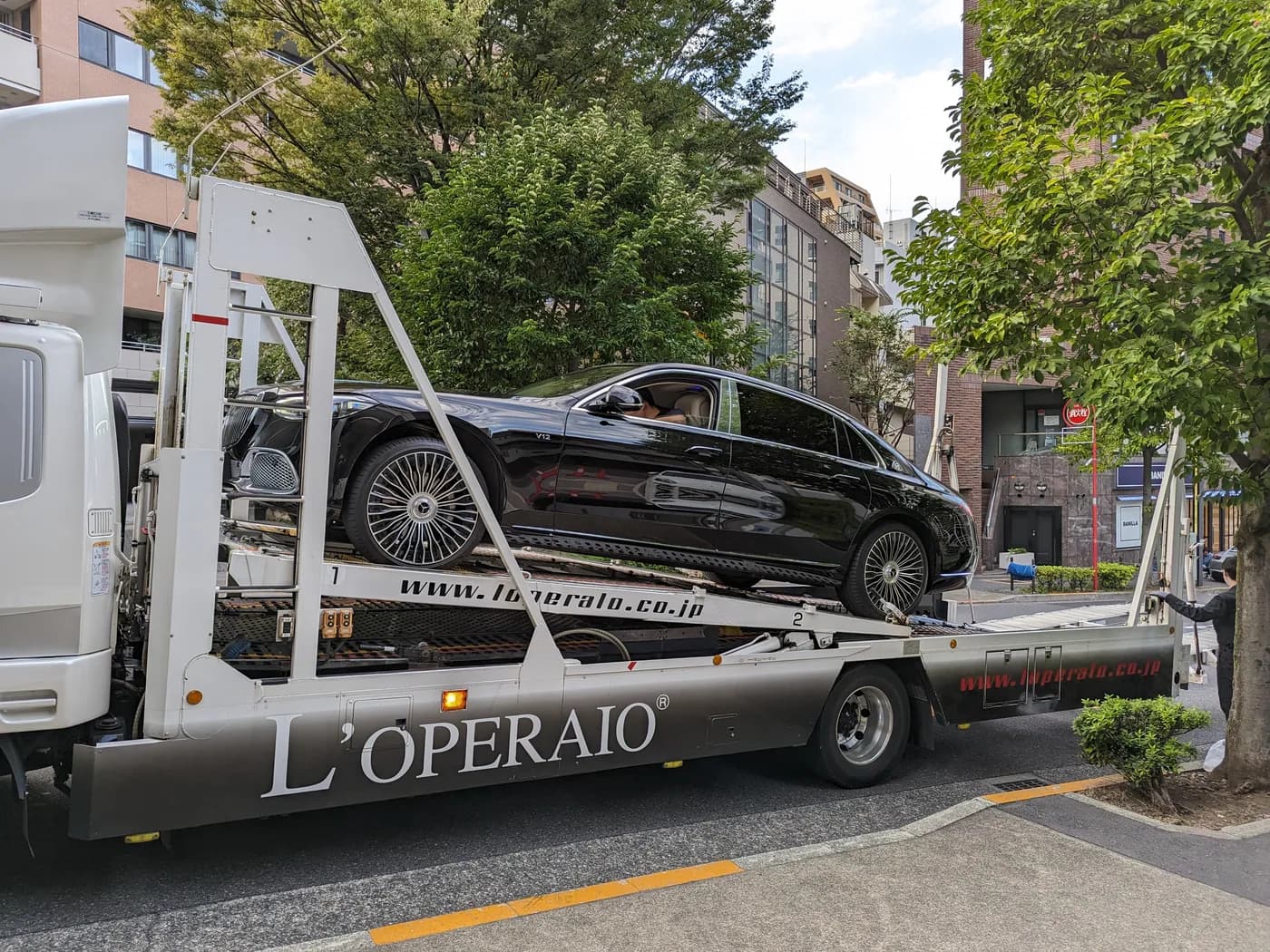
Open transport is the standard method for moving a vehicle. The car is loaded onto a multi-level trailer and travels with several other vehicles, secured to the trailer with straps, and completely open to the air on every side.
It is the method most vehicles travel by, and it is the one most carriers run. The trailer is purpose-built for the job: loading ramps at the back, decks that can be raised and lowered to fit different vehicle heights, and tie-down points spaced along each deck.
How the Vehicle Travels
Open Car Transport is a physical process with four stages. Knowing what they are makes it easier to judge what a provider is offering.
Step 1
Loading at pickup
The driver positions the trailer, lowers a ramp and brings the vehicle onto the deck. A vehicle that starts and drives is driven on; one that cannot be driven is winched on, which takes longer and needs different equipment. The driver records the vehicle's condition before it is secured.
Step 2
Securing the vehicle
The vehicle is tied down with straps over the tyres or basket straps through the wheels, so nothing is wrapped around the bodywork. The deck it sits on is set to a height that clears the vehicles around it, which is why different vehicles are positioned rather than simply loaded in order.
Step 3
In transit
The trailer carries several vehicles heading in broadly the same direction, and the carrier combines loads as it goes. That is what makes open transport economical, and it is also why pickup and delivery windows depend on how quickly a trailer fills rather than on a single vehicle's schedule. On some routings a vehicle is moved between trailers at a terminal, which is normal practice in the industry.
Step 4
Unloading at delivery
The vehicle is unloaded the same way it was loaded and inspected against the condition record made at pickup. Walking round the vehicle with the driver before signing anything is the part of the process that protects you if there is a dispute later.
Who Open Car Transport Suits
It is the standard method for a reason, but it is not the right answer for every vehicle. These are the shipments it fits.
Everyday vehicles
Daily drivers, family cars, commuter vehicles and most SUVs travel open. The method is built for exactly this kind of vehicle and this kind of budget.
Shipments where cost matters most
Because the trailer carries several vehicles, the cost of the trip is shared. Open transport is usually the more economical of the two methods, and it is the one with the widest availability on most corridors.
Vehicles that do not run
A vehicle that cannot be driven can still travel open. It is winched on and off instead, so the carrier needs to know in advance and may allow more time for it.
Relocations and one-off moves
A vehicle being moved because its owner is moving, rather than because the vehicle itself is the cargo, is the classic open-transport shipment.
What Open Car Transport Does Not Protect Against
The honest half of the comparison. Open transport is a shared, uncovered trailer, and those two facts are the source of every trade-off below.
- The vehicle is exposed to the weather and to road debris for the whole journey. Road film, dust and stone chips are a normal consequence of open transport, and no carrier can offer a chip-free trip on an open trailer.
- The vehicle travels in the open and is visible at every stop the trailer makes. Open transport does not conceal the vehicle or its contents.
- Because the trailer is shared, your vehicle's schedule depends partly on the other vehicles on it. A trailer that is waiting for one more load to fill a deck holds everything already loaded.
- Open transport is not the right choice where the finish of the vehicle is the priority. For a classic, a concours car or a vehicle whose paint is the point, enclosed transport exists for that reason.
- Additional protection against the elements — whether a carrier's own coverage or a separate policy — is a question for the provider you choose, and the terms differ between them.

How Open Car Transport Is Priced
Open transport is usually the more economical of the two methods, because the cost of the trip is shared between the vehicles on the trailer rather than carried by one shipment. That does not make it a flat rate. What a specific shipment costs is set by the distance, the pickup and delivery addresses at each end, the size and weight of the vehicle, whether it runs, and how flexible your dates are.
The cost factors on the homepage explain each of those in turn, and the transit time guide covers the scheduling side, which is separate from the drive. We do not publish average prices, because an unsourced average sets the wrong expectation before anyone has looked at the shipment.
How the Request Works
The same three stages apply whichever method you choose.
Step 1
Tell us about your shipment
Give us the pickup and delivery locations, plus basic vehicle details. This takes a few fields and no account.
Step 2
Review your transport options
Your route and vehicle details are used to work out which transport options suit the shipment, so you can see how the choice affects cost and timing.
Step 3
Arrange pickup and delivery
Once you have chosen an option, pickup and delivery are scheduled directly with the transport provider. You agree the terms with them before anything is booked.
Open vs Enclosed, Compared
The same vehicle, moved two different ways. What changes is exposure, relative cost and how many trailers are available to carry it.
Factor
Open transport
Enclosed transport
Typical use
Open
The everyday choice for most vehicles
Enclosed
Chosen when the vehicle is valuable or hard to replace
Protection
Open
Exposed to weather and road debris
Enclosed
Fully enclosed trailer, so exposure is limited
Relative cost
Open
Usually the lower-cost method
Enclosed
Usually costs more
Availability
Open
Widely available on most routes
Enclosed
Fewer trailers, so availability is narrower
Ideal vehicle type
Open
Daily drivers, family cars, most SUVs
Enclosed
Classic, luxury, modified and high-value vehicles
Open Car Transport FAQs
Is open transport safe for my car?
It is the standard method, and the majority of vehicles moved in the United States travel this way. A vehicle on a trailer is secured at four points with straps designed for the job and is not being driven, so it is not accumulating mileage or exposed to road hazards the way a driven car is. What open transport does not do is protect the paintwork from road debris and weather, which is the trade-off against enclosed transport.
Will the car arrive dirty or damaged?
Dirt is normal and expected — a vehicle on an open trailer crosses the same roads as any other vehicle, and road film and dust are the usual result. Damage is a different matter. The condition record made at pickup is what a delivery is measured against, so a wash after delivery is routine while a new mark on the bodywork should be raised with the driver before you sign.
How many vehicles are on the trailer?
A multi-level car carrier holds several vehicles at once and is normally loaded as close to full as the route allows, because an empty deck is a loss for the carrier. The exact number varies with trailer type and with the size of the vehicles on it, and we do not publish a capacity figure because it is not something a shipment can be promised.
Why is open transport cheaper than enclosed?
An enclosed trailer carries fewer vehicles and uses more specialised equipment, so the cost of the trip is spread across fewer shipments. Open transport shares the trip between more vehicles, which is what makes it the lower-cost method. Neither price is fixed: both move with distance, carrier availability on the corridor and how flexible your dates are.
Can a classic or luxury car be shipped on an open trailer?
It can, and people do move valuable vehicles this way. The reason most owners of classic, modified and high-value cars choose enclosed transport is that the exposure an open trailer involves — weather, road debris and an uncovered deck — is a risk they would rather not take with a vehicle that is hard to replace. If the vehicle is valuable to you, that is the trade-off worth thinking about rather than the price difference alone.
How do I request open transport for my vehicle?
Start the quote request with the route, then the vehicle, then your timing and preferred transport method, and finally your contact details. Saying open transport at the timing step is a preference rather than a booking: nothing is booked and nothing is agreed until you have seen what a provider offers and accepted their terms directly.
Route Guides
Route guides cover the pickup, delivery and seasonal detail on a specific corridor.
- Omaha, NE to Phoenix, AZ car shipping
- Oklahoma City, OK to Phoenix, AZ car shipping
- Tulsa, OK to Phoenix, AZ car shipping
- Grand Rapids, MI to Tampa, FL car shipping
- Rochester, NY to Tampa, FL car shipping
- New Haven, CT to Tampa, FL car shipping
- Cincinnati, OH to Dallas, TX car shipping
- Albuquerque, NM to Dallas, TX car shipping
Choose Open Transport for Your Move
Open transport suits most vehicles on most routes. Tell us the route and the vehicle, and you will see what the options look like before you share any contact details.